In today’s digital business environment, companies manage large volumes of electronic assets throughout their lifecycle. From laptops and servers to storage devices and networking equipment, businesses must ensure that retired IT assets are handled securely and responsibly. This is where ITAD ERP Reporting plays a critical role in protecting brands while ensuring audit-ready compliance.
Organizations across industries are under increasing pressure to meet data protection laws, environmental regulations, and internal governance standards. Without a reliable reporting system, businesses risk data breaches, compliance failures, and damage to their reputation. Implementing effective ITAD ERP Reporting helps companies maintain transparency, improve accountability, and safeguard their brand image.
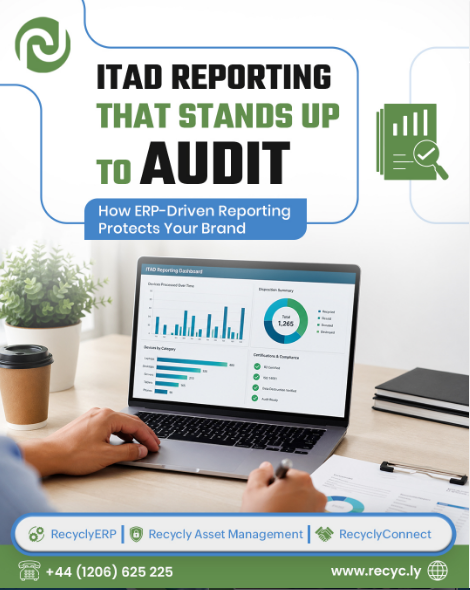
What is ITAD ERP Reporting?
ITAD ERP Reporting refers to the integration of IT Asset Disposition (ITAD) processes with Enterprise Resource Planning (ERP) systems to generate detailed, accurate, and compliance-focused reports. These reports track the complete lifecycle of retired IT assets, including collection, transportation, data destruction, recycling, resale, and final disposal.
By centralizing information within an ERP platform, businesses gain real-time visibility into asset management activities. This improves operational efficiency while ensuring all disposal processes are documented and traceable.
Why Audit-Ready Compliance Matters
Modern businesses must comply with strict regulations related to data security and environmental sustainability. Laws such as GDPR, HIPAA, and various e-waste regulations require organizations to maintain proper records of how IT assets are handled after use.
Audit-ready compliance ensures that businesses can quickly provide documentation during regulatory inspections or internal audits. Without proper ITAD documentation, organizations may face:
- Financial penalties
- Legal complications
- Data security risks
- Loss of customer trust
- Brand reputation damage
With ITAD ERP Reporting, businesses can generate accurate compliance reports instantly, reducing audit preparation time and minimizing risk exposure.
Protecting Brands Through Secure Reporting
A company’s reputation is one of its most valuable assets. Improper disposal of electronic devices can lead to sensitive data leaks, environmental violations, and public criticism. ITAD ERP Reporting helps organizations protect their brand by ensuring every asset is securely tracked and documented.
1. Improved Data Security
ERP-integrated ITAD reporting provides detailed records of data destruction activities. Businesses can verify that hard drives, servers, and storage devices have been securely wiped or destroyed according to industry standards.
This level of documentation helps prevent unauthorized access to confidential information and demonstrates a commitment to cybersecurity.
2. Enhanced Transparency
Transparency is essential for building trust with customers, stakeholders, and regulatory authorities. ITAD ERP Reporting offers clear visibility into asset disposition processes, including chain-of-custody tracking and disposal methods.
Detailed reporting allows organizations to prove that retired equipment has been handled responsibly and ethically.
3. Regulatory Compliance
Businesses operating in highly regulated industries must maintain accurate records for compliance purposes. ITAD ERP Reporting simplifies compliance management by automatically generating audit trails, certificates of destruction, and recycling reports.
This reduces manual errors and ensures businesses stay aligned with evolving regulatory requirements.
4. Sustainability and Environmental Responsibility
Consumers and investors increasingly value environmentally responsible organizations. ITAD ERP Reporting helps businesses track recycling rates, e-waste reduction efforts, and sustainable disposal practices.
These reports support corporate sustainability initiatives and strengthen a company’s environmental reputation.
Key Features of Effective ITAD ERP Reporting
To maximize compliance and brand protection, businesses should look for the following features in an ITAD ERP Reporting solution:
- Real-time asset tracking
- Automated compliance reporting
- Secure chain-of-custody documentation
- Data destruction verification
- Integration with existing ERP systems
- Environmental impact reporting
- Customizable audit reports
- Centralized asset lifecycle management
These capabilities improve operational control while reducing the risk of compliance gaps.
The Future of ITAD ERP Reporting
As digital transformation continues, businesses will manage even larger volumes of IT assets. Regulatory expectations surrounding data privacy and environmental sustainability are also expected to increase.
Future-ready organizations are investing in advanced ITAD ERP Reporting solutions to automate compliance, strengthen cybersecurity, and improve reporting accuracy. Technologies such as AI-driven analytics and cloud-based ERP integrations will further enhance visibility and decision-making capabilities.
Conclusion
In an era where data security and compliance directly impact brand reputation, ITAD ERP Reporting has become an essential business requirement. It enables organizations to maintain audit-ready compliance, secure sensitive information, and demonstrate responsible asset disposal practices.
By implementing robust ITAD ERP Reporting systems, businesses can reduce operational risks, improve transparency, and protect their brand from costly compliance failures. Companies that prioritize secure and well-documented IT asset disposition will be better positioned for long-term success in today’s competitive marketplace.